


Trusted by practitioners. Loved by everyday people.
-

 SAVE 46%
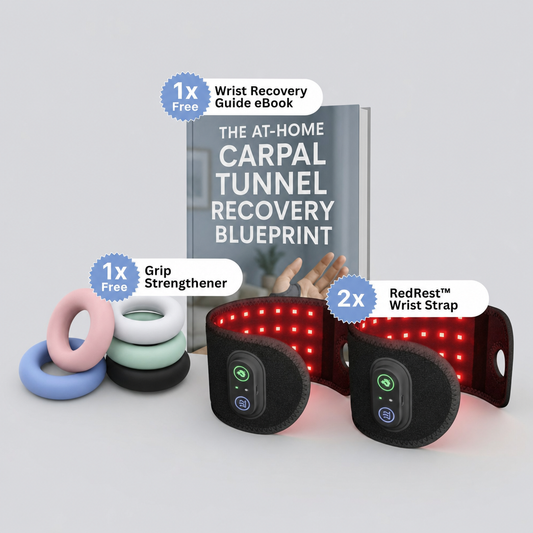
RedRest Light Therapy Wrist Strap
Regular price $68.00Regular price $68.00 Sale priceUnit price per$128.0046% -
 SAVE 46%
RedRest Light Therapy Hat
Regular price $148.00Regular price $148.00 Sale priceUnit price per$276.0046% -

 SAVE 46%
Adjustable Wrist Recovery Brace
Regular price $14.00Regular price $14.00 Sale priceUnit price per$26.0046%


How Red Light Therapy Works
Red light therapy works by exposing the body to low-level red and near-infrared wavelengths to support a range of health benefits. It achieves these effects by stimulating mitochondrial function and boosting the cell's production of energy (ATP).

Hurt Less
Targeted relief, right where you need it. Less inflammation, less stiffness, less of the aches slowing you down.

Move Better
Get back to moving freely. Eases stiffness and supports the joints that repetitive strain wears down.

Recover Faster
Bounce back quicker from flare-ups or hard workouts. Less fatigue, faster recovery, backed by research.
OVER 500 5 STAR REVIEWS
Your Questions, Answered
How does Red Light Therapy / Photobiomodulation actually work?
How does Red Light Therapy / Photobiomodulation actually work?
It comes down to helping your cells function more efficiently. The light works by clearing out nitric oxide that's gotten lodged in the cell's mitochondria, which allows oxygen to flow back in. The result? Your cells ramp up ATP production, giving them more energy to do their job.
What's the right way to use my Red Light Therapy wrist strap?
What's the right way to use my Red Light Therapy wrist strap?
It's easy. Simply wrap the strap snugly around your wrist so the light panel sits directly against your skin, over the area you want to treat. Secure it with the closure, turn it on, and let it work for 5-7 minutes. No standing in front of a device or measuring distance required; just strap it on and go.
Who shouldn't use Red Light Therapy?
Who shouldn't use Red Light Therapy?
Red light therapy (also called photobiomodulation or low-level laser therapy/LLLT) is safe for the vast majority of people. That said, a few groups should take extra care or skip it entirely:
- Photosensitive conditions: If you have lupus, porphyria, or another condition that makes your skin react to light, it's best to steer clear, since light exposure could trigger a reaction.
- Pregnancy: If you're pregnant, check with your doctor first. Research on red light therapy during pregnancy is still limited, so it's smart to be cautious.
- Epilepsy or seizure history: Some devices use pulsing light, which could potentially be a seizure trigger, so caution is warranted.
- Cancer: If you have cancer, particularly skin cancer, talk to your doctor before use. Some research indicates red light therapy may stimulate cell growth, which isn't ideal if you have a tumor.
- Eye conditions: Red light therapy is generally fine for your eyes, but if you have an existing eye condition or take medication that heightens light sensitivity, check with your doctor first.
- Photosensitizing medications: Certain drugs — some antibiotics, diuretics, and retinoids among them — can make you more sensitive to light. Talk to your healthcare provider if you're on any of these before starting treatment.
- Pacemakers or implanted devices: Consult your doctor or the device manufacturer first. Red light therapy generally doesn't interfere with pacemakers, but it's worth checking to be safe. Since the strap sits directly on the skin rather than at a distance, those with implanted devices should be especially diligent about checking with their provider beforehand.
As always, check with a healthcare professional before beginning red light therapy if you have any existing health conditions — they're best positioned to tell you whether it's right for your situation and how to use it safely.
Should I wear safety glasses with this device?
Should I wear safety glasses with this device?
Since the wrist strap is designed to sit on your wrist and doesn't shine toward your face or eyes, safety glasses generally aren't necessary for this product. That said, we still include a pair of darkened safety glasses with every order, and if you have any eye concerns or other health issues, it's worth checking with your doctor before use.
The 660nm and 850nm wavelengths we use have actually been studied for potential eye benefits and are under continued research for treating certain eye conditions. As a general precaution with any of our red light products, avoid pointing the light directly at your eyes.
Is it possible to overdo red light therapy?
Is it possible to overdo red light therapy?
Yes, it is. Overuse actually reverses the benefits because it puts additional stress on your cells instead of helping them. Keep sessions under 15 minutes per area, per day, and you'll be in safe territory. Push past that and you risk canceling out the good you just did.
For context: red light therapy has an excellent safety record, with no documented negative side effects across more than 3,000 clinical studies.
When will I start noticing results?
When will I start noticing results?
Good question! Many people feel some relief in the wrist soon after a session — less stiffness, less of that tingling or "pins and needles" sensation that comes with carpal tunnel and similar wrist pain. For more noticeable, longer-term relief, plan on 8 weeks of consistent daily use, which is the timeframe most of the supporting research is based on. Results vary person to person: some feel looser or less inflamed right after a session, while for others it can take up to 8 hours post-use to feel the full effect. For deeper relief from chronic or repetitive-strain pain, expect to use it daily for several weeks before you notice a real shift. Our recommended rhythm: 5 days on, 2 days off, repeat.
Keep in mind, the strap's job is to give your cells a boost — your wrist still has to do the healing. To support your results, pair sessions with good wrist posture/ergonomics, regular stretching or rest breaks if you're doing repetitive motion, and staying hydrated.
When will my order ship?
When will my order ship?
Orders ship out within 1-2 business days after purchase.
What happens if I'm not satisfied?
What happens if I'm not satisfied?
We're confident you'll be happy with it, but if not, you're covered. Return it within 90 days of delivery for a full refund, no questions asked.
Do you ship outside the US?
Do you ship outside the US?
Yes, we currently ship internationally.